The Simplest Truths
Buffett released his Thanksgiving farewell letter today.
To be honest, I don't consider myself a Warren Buffett "disciple." Unlike Steve Jobs, whose ideas feel like a form of genius that's nearly impossible to replicate, Buffett's philosophy is profoundly simple — accessible and practical enough to extend into personal life and learning. A constant, grounding reminder.
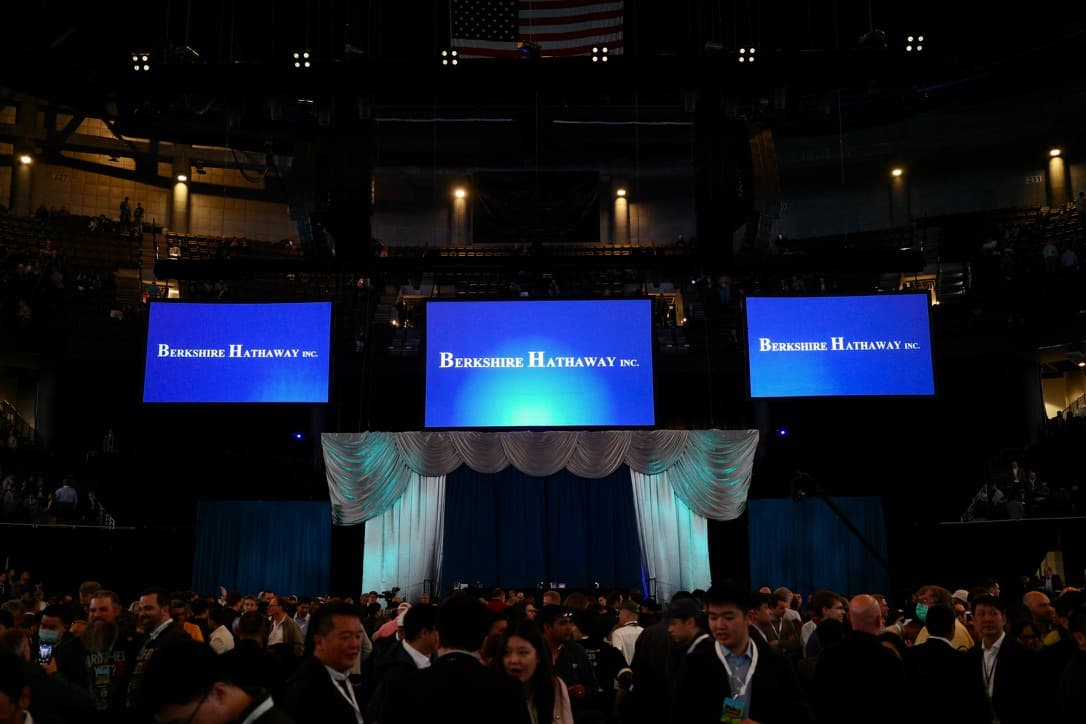
I was fortunate to attend the Berkshire Hathaway shareholder meeting this past May. When he announced his "retirement," the nearly two-minute standing ovation said everything. I noticed people who were shocked, wiping away tears, in disbelief. It was truly a life moment.
People treat his words as investment gospel, but the principles themselves are always incredibly plain — "the greatest truths are the simplest." Yet these simple guidelines led to an astonishing gain of 5,502,284% from 1964 to 2024, compared to 39,054% for the S&P 500. At that fund scale, such returns are unreachable. On the surface, investing seems to be just "choosing a quality asset at the right time and waiting for it to profit."
Berkshire's compounded annual gain from 1965 to 2024 was 19.9%, against 10.4% for the S&P 500 — a total gain of 5,502,284% versus the index's 39,054%. (Berkshire Hathaway 2024 Annual Report, "Berkshire's Performance vs. the S&P 500.")
This sounds simple. In practice, it's profoundly anti-human-nature. Maybe that's why Buffett is a legend.
In investing, or in life, I'd catch myself uncontrollably feeling FOMO, doubting my original decisions, being short-sighted, getting greedy, or "buying in" to others' opinions without truly understanding them. That's what makes you lose money — and not only money.
This is the exact opposite of the Buffett philosophy, which is built on long-termism, patience, discipline, operating within a "circle of competence," insisting on a "margin of safety," maintaining rational honesty, and admitting and learning from mistakes.
This philosophy extends far beyond finance. It applies to choosing a team, the city you live in, or a career path. It's just that for these choices, the returns aren't measured in money.
I've learned a lot from him. At least now, when those "all-too-human" feelings start to creep in, these principles are there to knock on my head and bring me back.